For independent musicians and recording artists, a striking music video is often the most powerful catalyst for building a brand, capturing audience attention on YouTube and Instagram, and driving streaming numbers. However, transitioning a song from an audio track to an engaging visual narrative requires a disciplined production workflow.
Understanding the step-by-step music video production pipeline helps artists and directors manage budgets, organize crews, and deliver high-impact visual projects.
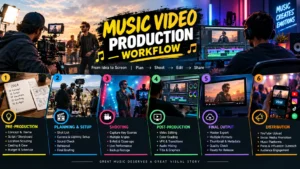
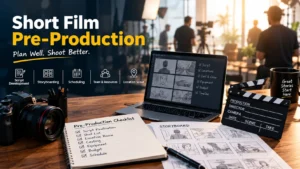
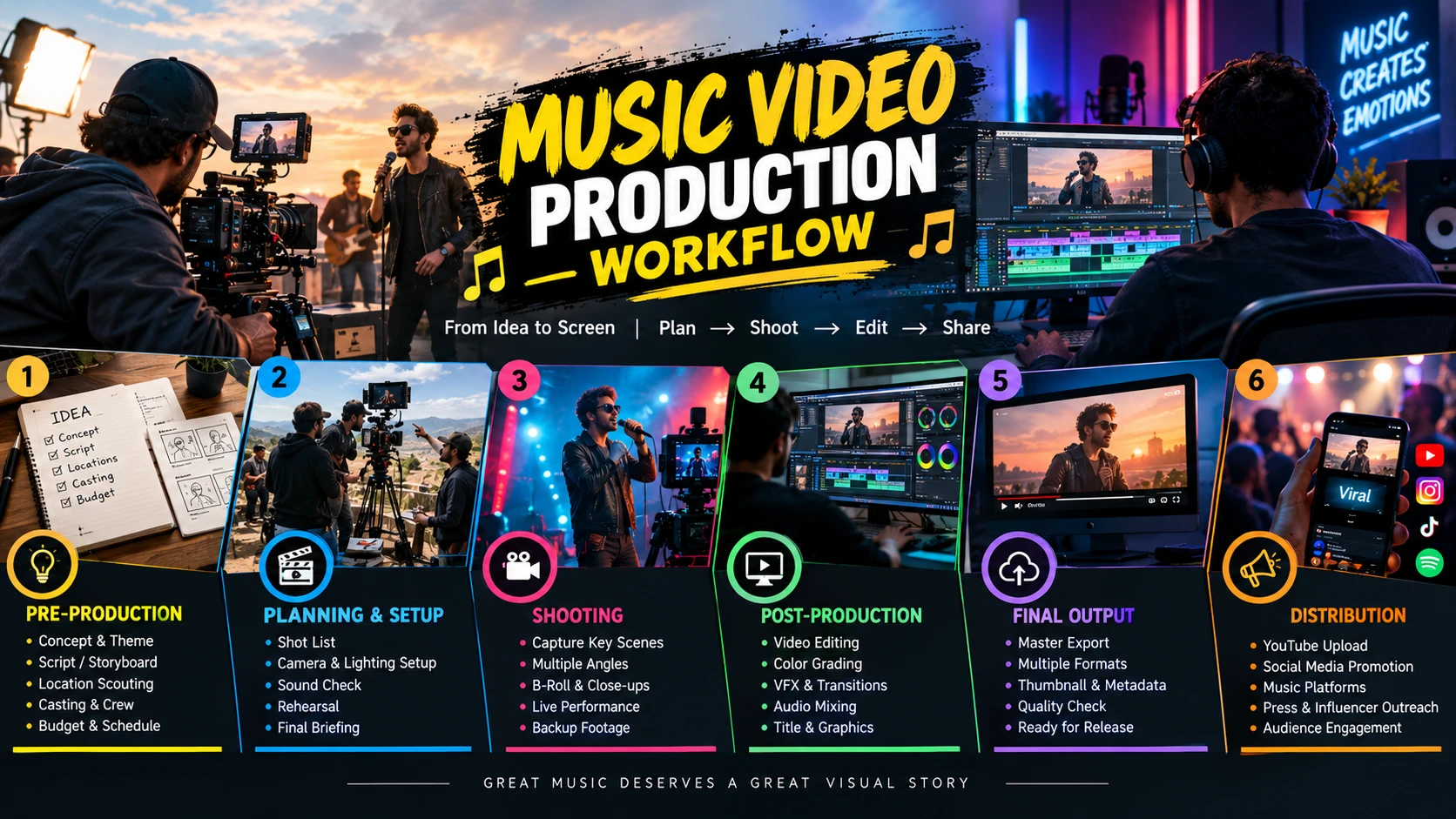
1. Pre-Production: Conceptualization, Mood Boards & Budgeting
Every memorable music video begins with a clear creative concept that complements the rhythm, genre, and emotional tone of the song.
- Developing the Treatment: The director creates a visual treatment outlining the storyline, performance setups, color grading palette, and key lighting cues.
- Budget Allocation: Breaking down expenses across equipment rental, location fees, crew salaries, costume design, and post-production editing.
- Location Scouting & Scheduling: Securing unique studio spaces, warehouses, or outdoor locations, and drafting a precise call sheet for shoot day.
2. Production: On-Set Execution & Performance Capture
The production phase is where energy on set dictates the visual magic of the final music video. Balancing lip-sync performance shots with narrative scenes requires tight coordination.
Essential production practices include:
- Playback Synchronization: Using high-output speakers on set to play the track at exact volume so artists can lip-sync accurately at normal speed and double-speed (for slow-motion editing effects).
- Cinematography & Lighting Rigs: Utilizing gimbals, sliders, and dynamic lighting setups (such as neon tubes, lasers, or high-contrast LED panels) to match modern music video aesthetics.
- Styling & Makeup: Professional wardrobe and makeup styling ensure artists and backup dancers look camera-ready across multiple costume changes.
3. Post-Production: Editing to the Beat
Editing a music video is fundamentally different from editing a narrative film or corporate video. Every cut, transition, and effect must sync seamlessly with the beat, tempo, and lyrical cadence of the song.
- Assembly & Cut-to-Beat: Cutting multi-cam performance footage and narrative sequences precisely on audio transients and musical beats.
- Visual Effects (VFX) & Transitions: Adding stylistic glitches, light leaks, seamless masking wipes, or digital compositing.
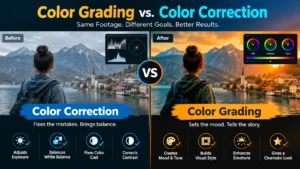
- Color Grading & Online Finishing: Applying bold, stylized color grades (such as moody cinematic teal-orange or vibrant neon cyberpunk looks) to give the video a high-end commercial polish.
Partnering with Creative Visual Directors
Creating a standout music video requires technical expertise, artistic vision, and flawless execution. Working with an established production house ensures your music is matched with unforgettable visuals.
Explore professional music video production and editing solutions on Yuvatar Films to elevate your next musical release.
Separate Frequently Asked Questions (FAQs)
Q1: How long does it take to shoot a professional music video?
A: Most standard music videos are filmed over 1 to 2 intense production days, preceded by 2 to 3 weeks of pre-production concept design and location scouting.
Q2: Why is music playback important during a music video shoot?
A: Playing the track aloud on set ensures that performers lip-syncing or playing instruments match the timing perfectly, which is critical during fast-paced editing and slow-motion playback.
Q3: What factors drive music video production budgets?
A: Primary cost drivers include location rentals, specialized lighting/camera packages, professional crew rates, styling, and post-production VFX complexity.