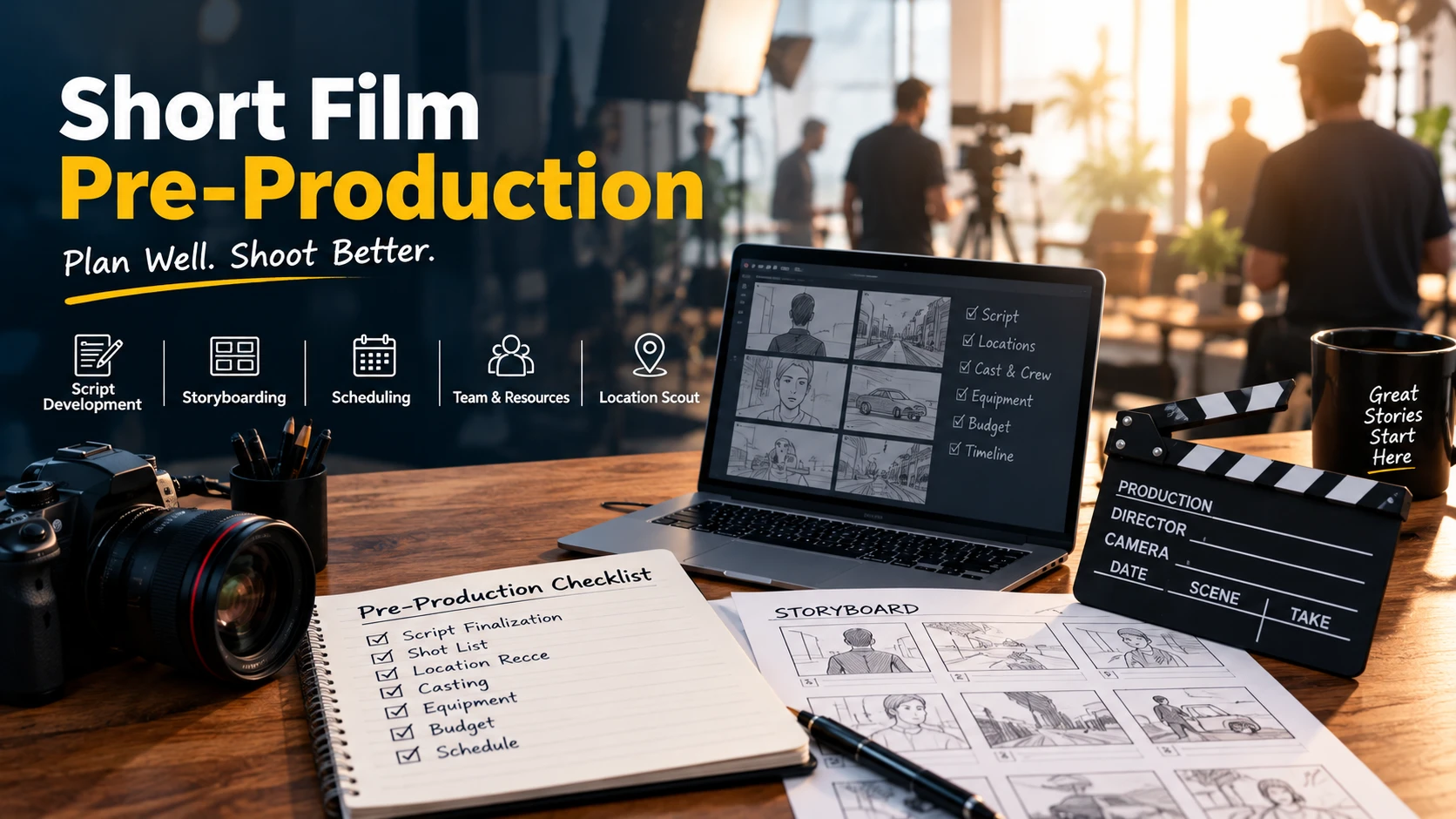
Making an independent short film is an exciting creative endeavor, but without a disciplined pre-production roadmap, minor oversights can lead to major budget overruns and operational delays on set. Pre-production is the architectural blueprint of filmmaking. It is the phase where creative vision translates into actionable schedules, technical checklists, and resource allocations.
For independent filmmakers operating on limited resources, mastering pre-production is the single most effective way to achieve cinema-grade production values without exceeding financial boundaries.
1. Script Breakdown: Deconstructing the Screenplay
Before budgeting or scheduling can begin, the director and line producer must execute a detailed script breakdown. Every scene in the screenplay contains hidden production requirements that must be identified early.
Key elements to extract during a script breakdown include:
- Scene Elements: Classify scenes as Interior (INT) or Exterior (EXT), and note Day or Night requirements.
- Cast Requirements: Separate principal cast members, supporting actors, and background extras.
- Props and Wardrobe: List specific items required for plot points, along with costume requirements for each character.
- Special Equipment: Identify shots that demand specialized camera tools such as gimbals, track sliders, or specialized lighting setups.
2. Location Scouting and Legal Clearances
Finding the right locations is critical for setting the visual tone of your film. However, shooting without proper permissions can result in sudden shutdowns and legal complications.
When securing film locations on a strict budget, follow these guidelines:
- Conduct Tech Recce Walks: Visit potential locations with your Director of Photography (DP) and Sound Recordist to assess natural lighting, power outlets, and background ambient noise.
- Secure Written Permissions: Obtain formal location release agreements from property owners, local civic authorities, or municipal film facilitation offices.
- Plan Crew Logistics: Ensure the location has accessible parking, rest areas, and dedicated spaces for equipment staging and catering.
3. Casting and Rehearsals: Maximizing Performance
On a low-budget short film, powerful performances can elevate the entire movie beyond its technical limitations. Dedicated casting and rehearsal sessions ensure actors are fully aligned with the director’s vision before rolling cameras.
- Auditions: Conduct structured auditions using selected script sides to evaluate actor chemistry and emotional range.
- Table Reads and Rehearsals: Schedule table reads to refine dialogue flow and iron out script pacing. Rehearsing blocking before shoot day saves valuable hours on set.
- Actor Agreements: Always issue clear talent release forms outlining shooting dates, screen credits, and non-commercial or festival distribution terms.
4. Technical Pre-Visualization: Storyboards and Shot Lists
Collaborating with the DP to create a shot list and storyboard eliminates guesswork during principal photography. Visual pre-planning ensures that every crew member understands camera placements, lens choices, and lighting setups in advance.
Organize your shot list chronologically by location and camera setup rather than script order. Grouping similar camera setups together minimizes relocation time and lighting re-rigs, allowing your crew to capture more coverage efficiently.
Partnering with Professional Production Experts
Navigating pre-production requires attention to detail, line-production discipline, and technical foresight. Whether you need line production support, camera packages, or complete post-production finishing, working with an established creative studio ensures seamless execution.
Explore custom filmmaking solutions on Yuvatar Films to bring your story from script to screen with professional cinematic quality.
Separate Frequently Asked Questions (FAQs)
Q1: How long should pre-production take for a 10-minute short film?
A: Ideally, pre-production for a short film should take between 4 to 6 weeks. This provides sufficient time for script breakdowns, location scouting, casting, and technical rehearsals.
Q2: What is the most common mistake during indie pre-production?
A: Rushing location recce and sound checks is the most frequent mistake. Overlooking ambient noise at an exterior location can lead to unusable audio and expensive post-production ADR.
Q3: How do shot lists help save money on set?
A: Shot lists prevent unnecessary gear re-rigging and camera moves. By shooting scenes out of sequence based on lighting setups, you save hours of crew time and avoid costly overruns.