In a crowded digital marketplace, commercial ad films remain the most influential medium for brands to drive awareness, build credibility, and convert viewers into loyal customers. However, producing a high-impact TV commercial (TVC) or digital ad campaign requires a precise blend of creative strategy, high-end cinematography, and meticulous post-production engineering.
Understanding the step-by-step commercial ad film production process enables brand managers and marketing teams to collaborate effectively with production agencies and achieve maximum return on investment.
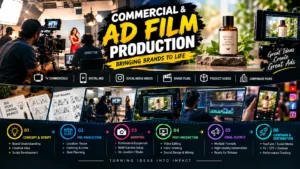
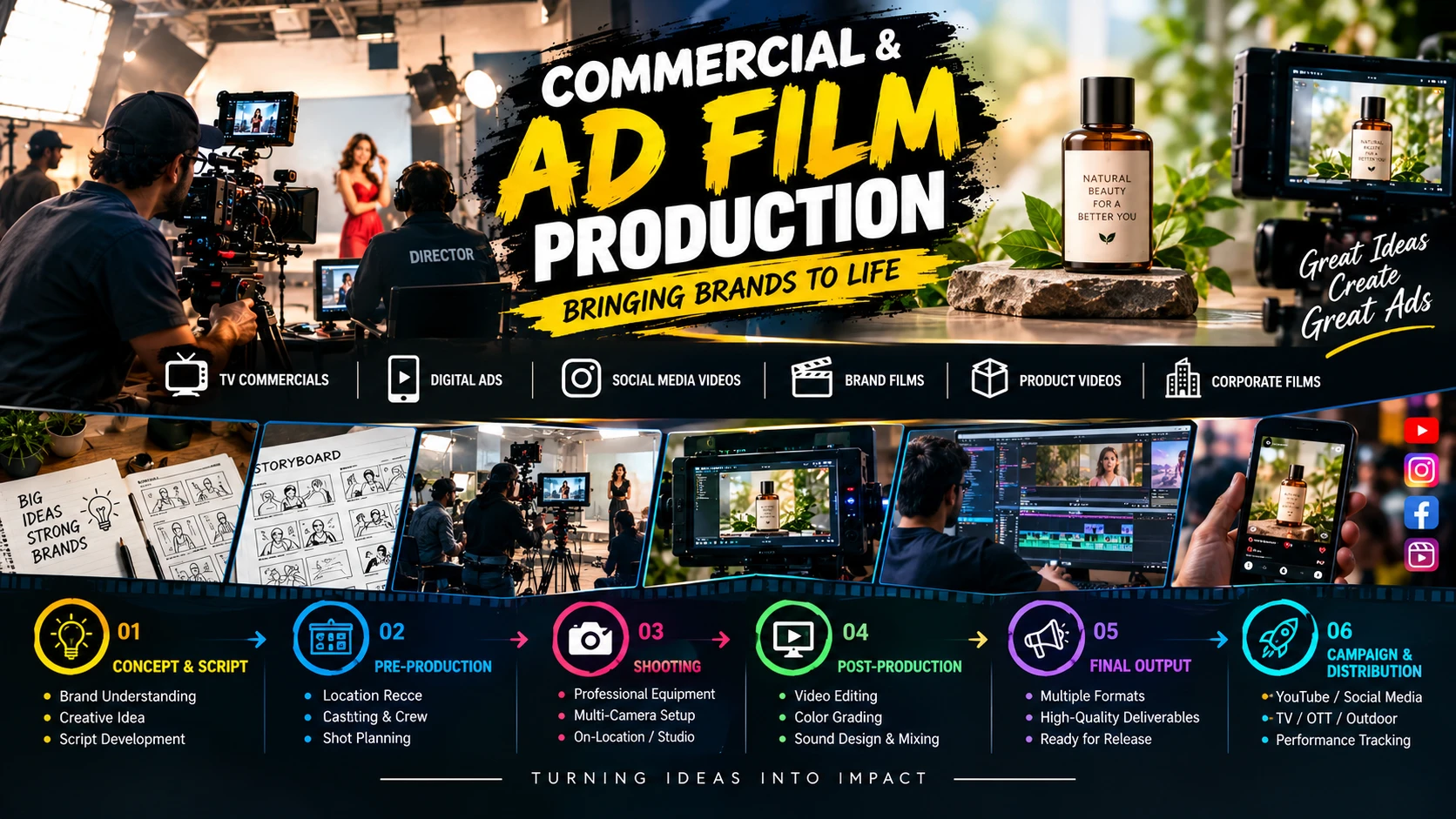
1. Concept Development and Creative Alignment
Every successful advertisement starts with a clear narrative concept that communicates the brand’s core value proposition. The creative agency and film production house work together to translate brand objectives into a visual storytelling format.
- The Creative Brief: Outlines campaign goals, target demographics, key brand messaging, and primary call-to-action (CTA).
- Treatment Note: The director prepares a visual treatment detailing the mood, color palette, pacing, lighting style, and music direction.
- Storyboarding and Animatics: Key scenes are illustrated frame-by-frame to align client expectations on camera framing, product placement, and graphics timing before filming begins.
2. On-Set Execution: Precision Filming
Unlike long-form films, commercial ad film shoots operate with extreme time precision. Every second of screen time must look polished, vibrant, and visually compelling.
Key focus areas during commercial shooting include:
- High-End Digital Cinema Cameras: Commercials utilize advanced cinema camera systems equipped with sharp prime lenses to capture rich colors and crisp product details.
- Specialized Lighting & Rigging: Professional lighting designers build custom overhead setups, softbox rigs, and accent lights to make product packaging and talent look immaculate.
- Product Styling & Art Direction: Dedicated prop stylists ensure that product shots—such as food styling, liquid splashes, or cosmetic textures—are captured flawlessly.
3. Post-Production: Color, VFX, and Sound Finishing
The real magic of commercial production occurs in the post-production studio. High-end post-production refines raw visuals into a sleek, broadcast-ready advertisement.
Essential post-production steps include:
- Offline & Online Editing: Assembling the best takes into precise 15-second, 30-second, or 60-second commercial cuts for social media and television broadcast.
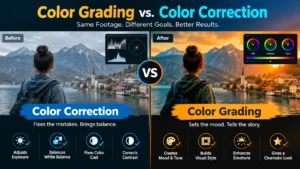
- Color Grading: Professional colorists apply high-contrast, vibrant visual grades that align with brand guidelines and create a luxury finish.
- Sound Engineering & Voiceover: Mixing studio-recorded voiceovers with custom sound effects (Foley) and commercially licensed soundtrack cuts to drive emotional resonance.
- VFX & Motion Graphics: Inserting clean 2D/3D brand logos, animated lower thirds, product callouts, and special visual effects.
Measuring Commercial Production Value
A well-executed commercial does not just look stunning; it tells a compelling brand story that connects emotionally with its audience. Partnering with an experienced video production house ensures your brand commercial is produced smoothly, delivered on schedule, and optimized for multiple digital channels.
Ready to launch your next commercial ad campaign? Explore professional ad film and commercial video solutions on Yuvatar Films to create visual stories that resonate with your target audience.
Separate Frequently Asked Questions (FAQs)
Q1: How long does it take to produce a commercial ad film?
A: A standard commercial ad film project typically takes 3 to 5 weeks from initial creative brief approval to final master delivery.
Q2: What deliverables are included in a commercial video package?
A: Deliverables usually include a master 30-second or 60-second film, along with shortened 15-second cutdowns and vertical formats (9:16) optimized for Instagram Reels and YouTube Shorts.
Q3: What drives the cost of commercial ad film production in India?
A: Key cost factors include celebrity or model talent fees, specialized locations/studio sets, high-end camera setups, motion graphics, and broadcast usage rights for music and voiceover.